How to Build SEO Content Clusters That Rank Faster
When aiming for consistent search visibility, posting standalone blogs is simply not enough, especially now with the competitive online landscape. Using the content cluster method is a great way to grow your organic traffic and improve your topical authority. Here at Ranks Growth, we utilize our expertise in SEO services to build effective content clusters that help websites rank faster, improve overall site UX, and help sites build search credibility.
What Are SEO Content Clusters?
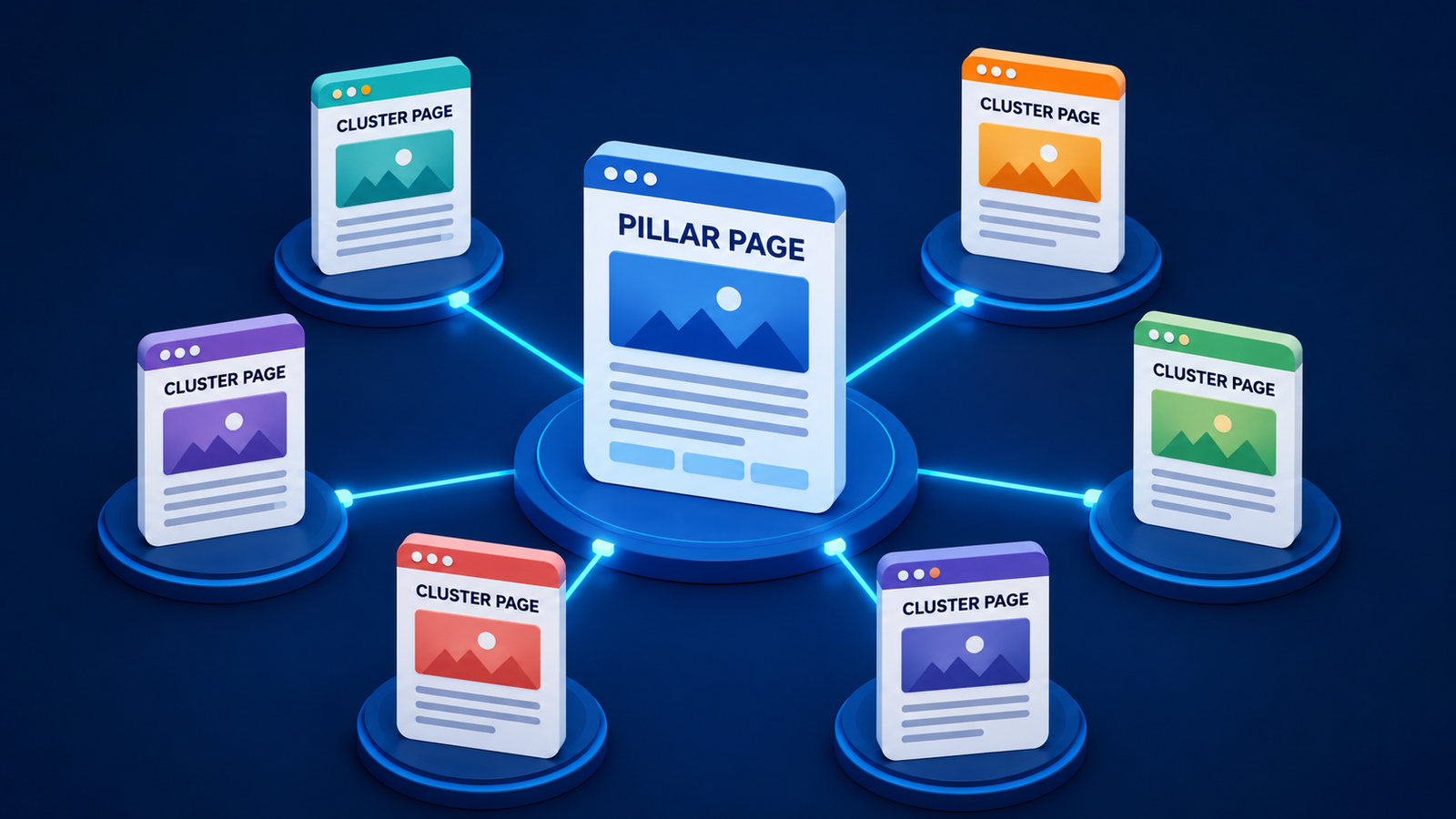
SEO content clusters contain many articles that are related to a single topic, which is the central focus, or pillar page. Clusters contain a supporting page that addresses the broad topic. All the pages and links create a structure that shows search engines the authority and expertise on a particular topic. For instance, a page on a site that offers digital marketing services may contain a pillar page on the “Complete SEO Guide” and all the supporting pages cover the remaining topics of keyword search, technical SEO, link building, on-page SEO, and content strategies.
Why SEO Content Clusters Help Websites Rank Faster
Content clusters show that a page has a lot of depth on a particular topic, and search engines are always looking to show users the best and most complete information.
Here are some major advantages to using SEO content clusters.
1. Improved Topical Authority
As your site adds related content, those pieces help each other refine your site’s authority in that topic. Using content clusters instead of individual articles gives search engines a bigger reason to recognize your site.
You will be able to compete for more tough and complex queries, and likely win, because a content cluster shows search engines and users that your site is a reliable repository of content.
2. Better Internal Website Structure
Organizing content into clusters and linking them strategically is a basic rule of good internal linking. A good internal linking strategy helps both users and search engines navigate your site easily.
There are many advantages to good internal linking.
- Helps search engines find new content faster.
- Distributes authority to less-read pages.
- Helps users find and stay engaged with information relevant to their searches.
- Helps search engines and users understand the structure of your site.
Without a good internal linking strategy, you’re unlikely to see your desired growth from search engine optimization.
3. Enhanced User Experience
Content clusters are more efficient and drive less frustration since users have to search less to find complete answers. Content clusters are more efficient for users because they help guide the reader from general content to specific content.
Better performance and optimization of the core web vitals allow users to have fast, more stable, and seamless browsing. A better user experience will drive better search engine optimization results.
Step-by-Step Guide to Building SEO Content Clusters
Building a content cluster that performs well means you need to plan, do research, and refine your process over time. Here, we will tackle the important things you need to develop a content cluster that drives measurable results.
Step 1: Choose Your Core Topic
The first decision you will make is determining a topic that is a broad enough to give your marketing team multiple avenues to build content and pages. Additionally, your central topic needs to have search volume and align with your business and your audience.
Typically, the central topics for a digital marketing solutions firm could be:
- Strategies for SEO
- Content Marketing
- Optimization of Websites
- Link Building
Select a topic that will allow you and your team to show your firm’s knowledge and expertise and add value with your content.
Creating SEO Content Clusters: An Easy How-To
Building a content cluster that performs well means you need to plan, do research, and refine your process over time. Here, we will tackle the important things you need to develop a content cluster that drives measurable results.
Step 2: Perform Comprehensive Keyword Research
The goal of your keyword research is to help determine what questions and what topics your target audience is trying to find information about. Instead of placing your focus on keywords that have the highest search volumes, place your focus on keywords and key phrases that will help you develop your content cluster pages.
Your keyword strategy should include:
- the keywords for the pillar pages
- long-tail keywords for the cluster pages
- mainly informative search queries
- transactional keywords that align to your business
When you add the above strategies to your content, each of the pieces of content you create will help you reach your overall business goal and will help you with your SEO.
Step 3: Create a High-Quality Pillar Page
Your content cluster will need a pillar page. This page will have an overview of the main topic and will include links for the remaining, more detailed, pages. For the first content page that will give the overview of the main topic, design for clarity and comprehensiveness; include as many questions that you think readers will have as possible.
Pillar pages contain the following:
- Clear structure for the content with proper heading tag optimization.
- engaging images, graphics, and links for examples
- good navigation for the different sections
- well-thought-out and placed calls-to-action
- well-crafted metadata
Optimizing meta tags clarifies what your pages are about in search results, which can boost your click-through rate. Meta tag optimization also helps people determine if your page is worth a visit.
Step 4: Develop Supporting Cluster Content
After creating your pillar page, write articles that cover the remaining, specific aspects of the main topic. Avoid repeating the pillar page. Include your cluster page findings.
SEO friendly content writing is practical, addresses user intent, is readable, and is easy to find. To be your most valued asset, each article must feature helpful information and be organized and formatted clearly with naturally placed keywords.
At Ranks Growth, you can trust that our services will create content clusters that grow your rankings and bring the right traffic. Our proficient services include an integration of customized clusters, research, and audience-based writing.
Step 5: Implement Strategic Internal Linking
When pages are connected appropriately, articles become full clusters.
Your Internal link strategy should include the following:
- On the primary page, all cluster pages must be linked.
- The cluster pages must link back to the primary page.
- The remaining cluster pages must be interlinked.
When applied properly, Internal linking SEO strategies provide search engines with a clear understanding of the content that has been covered by your website.
Step 6: Optimize Technical SEO Factors
No amount of great content can rank on a poorly performing site. Content clusters require great technical SEO.
Things to check are:
The speed and performance of your site.
- How your site looks on a mobile device.
- If your site offers a secure browsing experience.
- If your site has been indexed appropriately.
- If your site has structured data.
Website optimization for the Google search algorithm considers how easy or difficult your site is to use and the performance of the user experience. Using the Professional Google Core Web Vitals, search performance and competitiveness for your site is greatly improved.
Strengthening Content Clusters with Off-Page SEO
Content that is both relevant and of high quality is a must-have. However, there is also importance in external authority pertaining to the subject.
Guest posting is a great example that allows companies to include great relevant content on important sites and gain high–quality backlinks. It is also important to have manual link building that pertains to the subject and assists in authority.
Combining a good content cluster strategy with ethical link building can be a great way to improve organic growth.
Common Mistakes to Avoid When Creating Content Clusters
Failure to account for key elements in cluster development causes many websites to underperform. Here’s how to do content clusters correctly.
Don’t Create Duplicate or Incomplete Content
Each support article must be distinct and valuable. Writing support content with the same information over and over is counterproductive and will negatively impact your content strategy.
Don’t Forget to Consider Search Intent
Knowing what your audience is looking for is the first step to successfully completing a search. Content must address questions and content needs to solve problems, not just fill a keyword.
Poor Linking Structure
If your content clusters have an inadequate or incomplete linking structure, search engines will struggle to identify the clusters you have created. Linking is a key part of cluster content success.
Don’t Forget to Refresh Content
Once you create content for a search, that is not the end of the process for search optimization. Constantly refreshing your content by adding new information and examples will help your position in search.
How Ranks Growth Helps Businesses Build High-Performing Content Clusters
Creating great content clusters focused on search optimization is a skill that requires many supporting strategies and techniques.
Ranks Growth does all of this. We specialize in keyword-focused, optimally linked content that is backed by a strong technical and manual linking strategy. We use a data-centric approach to develop content strategies that yield enhanced visibility and audience targeting that translates into lasting business growth.
Conclusion
SEO Content Clusters change how search engines place websites and how businesses promote themselves. Now, building a website becomes a lot faster if different webs on the site focus around a few specific topics, especially if the webs are made to attract backlinks.
If a business is building a new site or trying to improve an existing site, focusing on organizing website content into clusters will keep selling the business and the services the business provides for a long time. Ranking higher on a search engine will be easier for a business if they use Ranks Growth for their SEO services and business.
FAQs
1. What is an SEO content cluster?
An SEO content cluster is a group of related articles connected to a main pillar page. It helps search engines understand your website’s expertise on a topic and can improve rankings.
2. How do content clusters help websites rank faster?
Content clusters improve topical authority, enhance internal linking, and provide a better user experience, which helps search engines recognize your website as a valuable resource.
3. What is the importance of internal linking in SEO content clusters?
Internal linking helps connect related pages, improves website navigation, distributes page authority, and makes it easier for search engines to crawl your content.
4. How can Ranks Growth help with SEO content clusters?
Ranks Growth provides professional SEO services, including content strategy, SEO-friendly content writing, technical optimization, and link-building solutions to create effective content clusters.