Generative Engine Optimization (GEO): How to Get Your Business Featured in AI Search Results
Search engines are evolving rapidly. With the rise of artificial intelligence tools, conversational search platforms, and AI-powered assistants, users are no longer just browsing traditional search engine results pages. Instead, they are receiving direct answers generated by AI systems that pull information from multiple sources across the web. This shift is transforming the way businesses approach digital marketing and search visibility.
This is where generative engine optimization comes into play. As AI-driven search platforms continue to grow, companies must adapt their strategies to ensure their content appears within AI-generated answers and summaries. Businesses that ignore this change risk losing valuable online visibility and potential customers. By implementing the right strategies for AI search visibility optimization, brands can position themselves as authoritative sources that AI engines rely on when generating responses.
Understanding how generative search works and optimizing content accordingly can significantly improve a brand’s ability to appear in AI-powered results.
What is Generative Engine Optimization (GEO)?
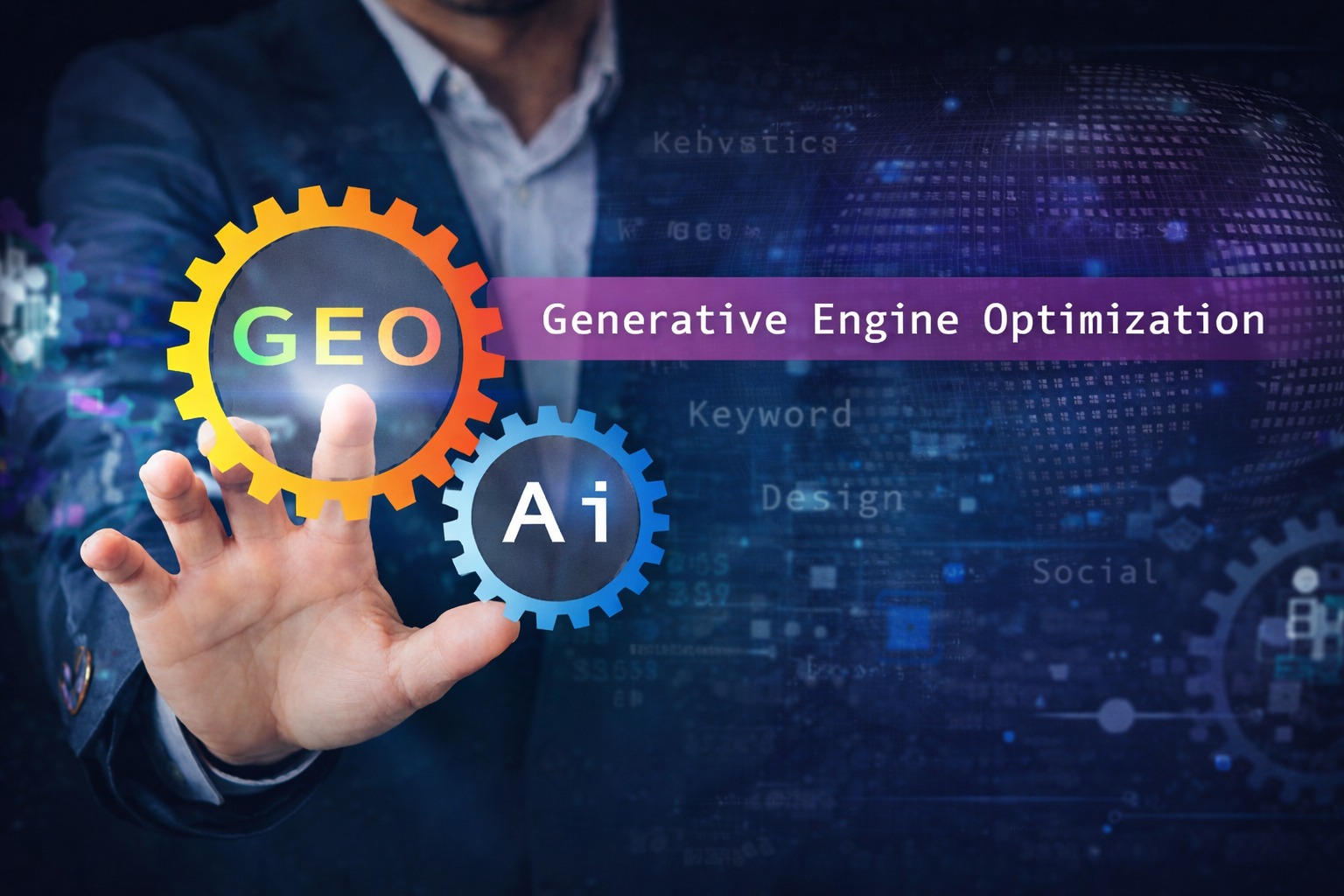
Generative Engine Optimization (GEO) is the process of optimizing digital content so that it can be discovered, understood, and referenced by AI-powered search engines and large language models (LLMs). Unlike traditional SEO, which focuses primarily on ranking web pages in search engine results pages (SERPs), GEO focuses on making content accessible and valuable to AI systems that generate direct answers for users.
Traditional SEO strategies emphasize keywords, backlinks, and rankings. While those elements still matter, AI search engines rely more heavily on structured data, semantic relevance, and authoritative content to generate responses.
Key differences between traditional SEO and GEO include:
- Search experience: Traditional SEO focuses on page rankings, while GEO focuses on appearing in AI-generated answers.
- Content structure: GEO requires highly structured and semantically clear content.
- Entity recognition: AI systems prioritize content that clearly identifies topics, entities, and relationships.
- Answer-driven optimization: GEO prioritizes concise, informative content that AI models can easily summarize.
By implementing generative engine optimization, businesses can increase their chances of being cited or referenced by AI search systems.
Why Businesses Need GEO for AI Search Visibility
The way people search for information is changing rapidly. AI search tools, conversational assistants, and generative search engines are now delivering instant answers instead of simply listing websites.
This shift means businesses must optimize their content for AI search visibility optimization, not just traditional search rankings.
Here are some reasons why GEO is becoming essential:
1. AI Search Engines Provide Direct Answers
Modern AI search systems often generate summaries or responses without requiring users to click through multiple websites. If your content is structured properly, AI engines may use it as a trusted source.
2. Search Behavior is Becoming Conversational
Users now ask detailed questions instead of typing short keywords. AI systems interpret these queries using natural language processing, making semantic relevance more important than ever.
3. Authority Matters More Than Ever
AI systems prioritize content from credible and authoritative sources. Brands that build trust and provide expert-level information are more likely to be featured.
4. Visibility Beyond Traditional Rankings
Even if your website does not rank #1 in search results, it can still be referenced in AI-generated answers when optimized properly.
These factors make generative engine optimization a critical strategy for modern businesses that want to remain competitive in the AI search landscape.
How Generative Engine Optimization Works
To understand how GEO works, it’s important to look at how AI search engines gather and generate information.
AI models analyze massive datasets and web content to generate answers. When responding to queries, these systems identify authoritative sources and summarize relevant information.
Generative Engine Optimization focuses on making content easy for AI systems to understand and use.
The process typically involves:
- Creating structured, informative content that answers specific questions.
- Using semantic relationships between topics, entities, and keywords.
- Building authority signals through trusted sources and expertise.
- Organizing content clearly so AI systems can extract key insights.
By applying these techniques, businesses can significantly improve their ai search visibility optimization and increase the likelihood of appearing in AI-generated responses.
Key Strategies for Improving AI Search Visibility
Businesses that want to benefit from GEO must adopt strategies designed specifically for AI-driven search environments.
Structured Content
AI systems favor well-structured content that is easy to interpret. Using clear headings, subheadings, and organized sections improves readability for both users and AI engines.
Best practices include:
- Using descriptive headings (H2 and H3)
- Organizing content into logical sections
- Including concise explanations and summaries
Semantic Optimization
Instead of focusing only on keywords, semantic optimization focuses on the meaning behind search queries.
Effective strategies include:
- Covering related topics within the same article
- Using context-rich language
- Addressing common questions and user intent
Authority Signals
AI systems prefer content from credible sources. Establishing authority is essential for GEO success.
You can strengthen authority by:
- Publishing expert-level content
- Earning high-quality backlinks
- Demonstrating industry expertise
AI-Friendly Formatting
Formatting plays a significant role in helping AI models understand your content.
Important formatting techniques include:
- Short paragraphs
- Bullet points for key information
- Clear and direct explanations
These elements make it easier for AI engines to extract useful information from your content.
Entity-Based Optimization
Entity-based optimization helps AI systems recognize key topics and relationships within content.
Examples include:
- Clearly defining concepts
- Mentioning relevant organizations or tools
- Using contextual references
These strategies contribute directly to better ai search visibility optimization and stronger AI search performance.
How GEO SEO Services Can Help Businesses
While many companies understand the importance of AI-driven search, implementing GEO strategies effectively requires specialized knowledge.
Professional GEO SEO services help businesses align their digital content with the requirements of AI-powered search systems.
These services typically include:
- AI search visibility analysis
- Content optimization for generative engines
- Semantic keyword research
- Entity-based content strategy
- Structured content development
With the right GEO SEO services, businesses can improve their chances of appearing in AI-generated search results, answer boxes, and conversational AI responses.
This not only improves visibility but also positions brands as trusted authorities in their industries.
Why Choose Ranks Growth for GEO SEO Services
Implementing GEO strategies requires both technical expertise and a deep understanding of modern search behavior. This is where Ranks Growth provides a significant advantage.
Ranks Growth specializes in advanced SEO strategies designed for both traditional search engines and emerging AI-driven platforms. Their team focuses on ai search visibility optimization, helping businesses adapt to the evolving digital landscape.
Key advantages of working with Ranks Growth include:
- Advanced AI-focused SEO strategies
- Expertise in structured and semantic content optimization
- Proven methods for improving online authority
- Customized strategies tailored to each business
By combining traditional SEO expertise with modern AI optimization techniques, Ranks Growth helps businesses maximize their digital visibility and stay ahead of emerging search trends.
Future of AI Search and GEO
AI-powered search is still evolving, but its influence on digital marketing is already significant. Generative search technologies are expected to become even more sophisticated in the coming years.
Future search experiences will likely include:
- Fully conversational search interfaces
- Personalized AI-generated recommendations
- Multi-source AI summaries instead of simple link lists
- Increased reliance on authoritative content
Businesses that invest early in generative engine optimization will be better positioned to benefit from these changes.
As AI continues to reshape search behavior, companies that prioritize structured, authoritative, and semantically optimized content will gain a major competitive advantage.
Conclusion
The digital search landscape is entering a new era driven by artificial intelligence. Traditional SEO strategies alone are no longer enough to ensure online visibility. Businesses must adapt to AI-powered search engines that generate answers rather than simply listing websites.
This shift makes generative engine optimization an essential component of modern digital marketing. By optimizing content for AI systems, businesses can improve their chances of being referenced in AI-generated results and conversational search platforms.
Implementing the right GEO strategies — including structured content, semantic optimization, and strong authority signals — can dramatically improve AI search performance. Partnering with experienced agencies like Ranks Growth can further accelerate success through professional GEO SEO services and advanced ai search visibility optimization strategies.
As AI search continues to grow, businesses that embrace GEO today will gain a significant advantage in the future of digital discovery.